MIDDLE TRIASSIC (ANISIAN) CEPHALOPODS FROM THE MECSEK MOUNTAINS, HUNGARY
DOI:
https://doi.org/10.54103/2039-4942/17253Parole chiave:
Mecsek; Anisian; Nautiloidea; Ammonoidea; biostratigraphy; palaeobiogeography.Abstract
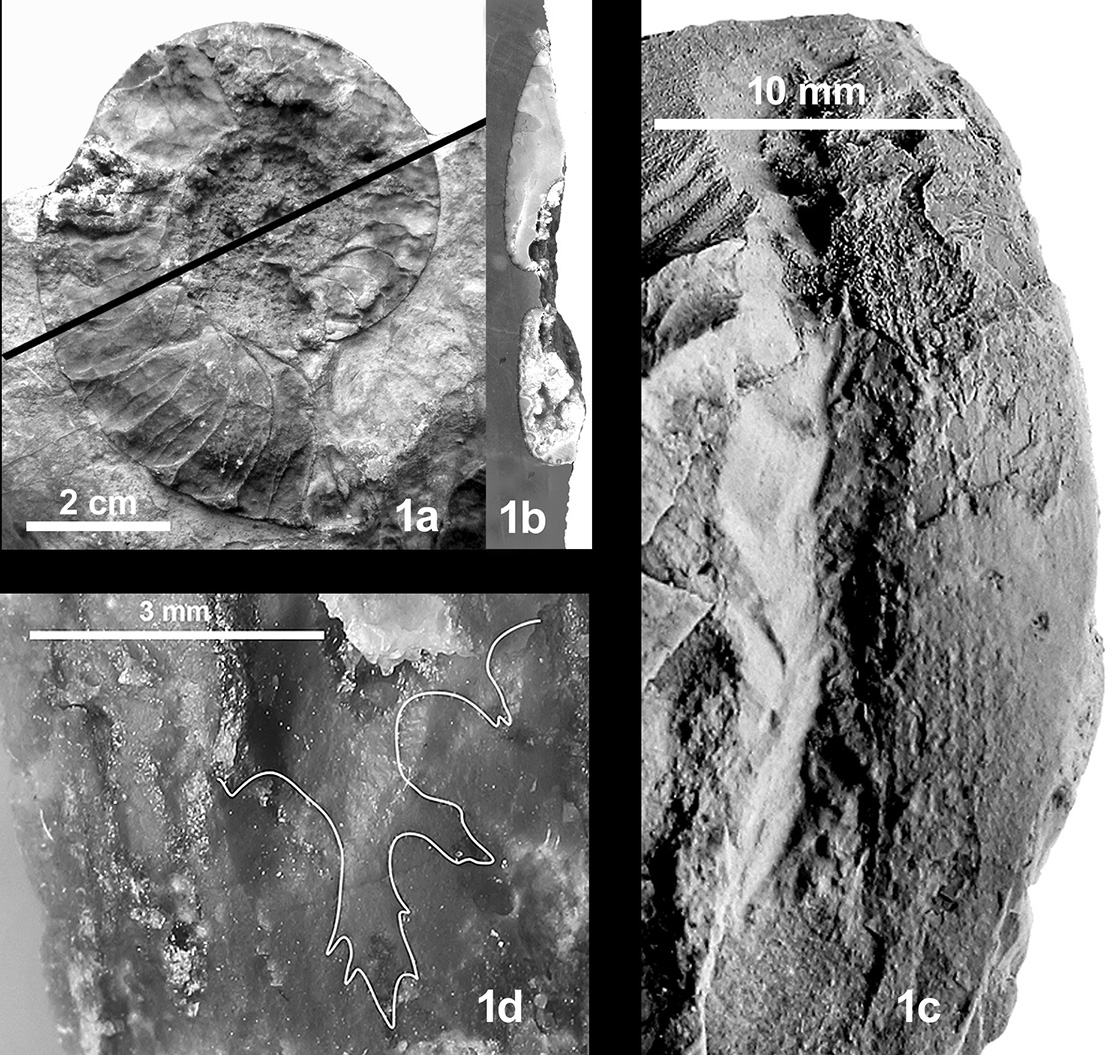
Recent nautiloid and ammonoid finds from the Middle Triassic Zuhánya Limestone Formation in the Mecsek Mountains (south Hungary) proved that the formation encompasses the whole Pelsonian and the lower Illyrian substages of the Anisian Stage. On the basis of 11 identified ammonoid species, the Balatonicus and Trinodosus zones have a complete record. The stratigraphical position of the Zuhánya Limestone on the whole corresponds to the Felsőörs Limestone in the Balaton Highland. The palaeobiogeographical evaluation of the cephalopod fauna showed that the elements of the nautilid fauna point mostly to Germanic and partly to Sephardic affinity. On the other hand, the ammonoid fauna has no Germanic elements; most of the species are Alpine in character, while the species Procladiscites brancoi indicates Dinaridic connection, or at least an occasional appearance of pelagic organisms. These results endorse the previous palaeogeographical assumption and suggest that during the Middle Triassic the Mecsek succession was situated along the European shelf, between the Vindelician-Bohemian Land and the open Tethyan Ocean.
Dowloads
Pubblicato
Fascicolo
Sezione
Licenza
Copyright (c) 2022 Attila Vörös, Gyula Konrád, Krisztina Sebe

Questo volume è pubblicato con la licenza Creative Commons Attribuzione - Non commerciale - Non opere derivate 4.0 Internazionale.

Rivista italiana di Paleontologia e Stratigrafia dihttp://riviste.unimi.it/index.php/RIPS è distribuito con Licenza Creative Commons Attribuzione - Non commerciale - Non opere derivate 4.0 Internazionale.