
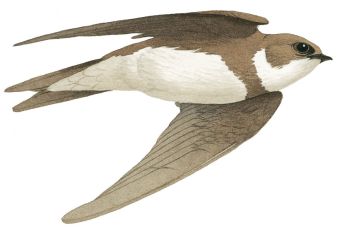
Proper gravel management may counteract population decline of the Collared Sand Martin Riparia riparia
DOI:
https://doi.org/10.30456/avo.2019204Keywords:
quarry restoration, Riparia riparia, river dynamic, nest site selectionAbstract
Riparian habitats have gone through major structural changes, and related bird populations had to suffer the consequences or adapt to the newfound conditions. Here, we present the results of the analysis of on the river and quarry evolution, in relation to a long-term monitoring (1970-2016) of a Sand Martins population nesting along the River Po in northern Italy. During the course of the study, the population went from breeding in the natural river banks to more anthropogenic sites in the surrounding quarries. The alteration of the river dynamic and linearization of the course, alongside the development of the sand quarries, may have caused this change. We conclude with a consideration on the ways to support the survival of populations of riparian birds. Functional nesting habitat along the river should be better preserved, and potential nesting areas in the surrounding quarries should be protected with long term restoration projects. Sand quarries are not free of threats, and cooperation among stakeholders has proven to be of the utmost importance to ensure the success of the population breeding in the area.
Downloads
Published
Issue
Section
License

This work is licensed under a Creative Commons Attribution-ShareAlike 4.0 International License.